Congratulations to our dental assistant Samantha Stoehr, who won 3rd place for her essay in the Best Office Contest through the American Dental Assistants Association. Her article appeared in the September/October edition of the Dental Assistant Journal – but you can read it here:
Kids hate going to the dentist. This fact isn’t disputed; it’s a widely accepted truth that’s to the point of being cliché. Parents tend to dread the anxiety and drama of a dental cleaning and checkup, especially if they have more than one young child.
However, there is a place in the St. Louis area where children can receive gentle, thorough dental care and actually be excited about it. They ask their parents when their next cleaning is, looking forward to it like a trip to grandma’s, or Easter. Parents can hardly believe it.
They also can’t believe how easy it is on them, as well as their children. A family of five can get cleanings, x-rays, and examined by the doctor in under a half hour? Plus, if their appointment is at 10:00am, all of their children will be in the chair by 10:02am.
This is just a sliver of what sets us apart at the pediatric dental offices of Drs. Appelbaum, Dill, Varble, and Wong. Along with our stellar customer service and attention to detail, we consistently bring patients back on time, get them in and out within their appointment time, and most importantly, we get the patients excited about their oral health.
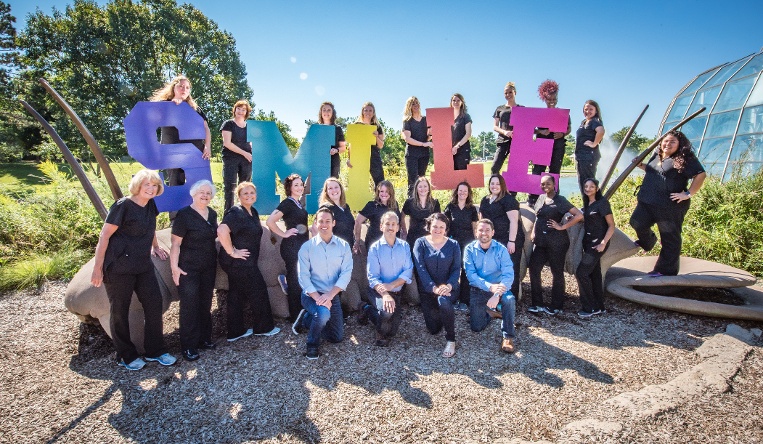
The way we interact with patients and parents is our main focus; we always make sure we put them and their concerns first. The doctors and staff are always willing to listen to any issue someone may have, and we do our best to work with them. If a child complains about the bright lights when we lay their chair back, a pair of animal print sunglasses is on its way.
If a parent has a concern about x-rays or fluoride treatments, or the pros and cons of resin versus amalgam fillings, the doctors are right there to answer their questions and help them make an informed decision. They are upfront and honest, and the parents feel confident in trusting them. And the doctors make their opinions available at all times.
One of our doctors is always on call, even on weekends, for dental emergencies. Calling the emergency line will not direct you to an answering machine or exchange service; it rings directly to their cell phones.
If there is an issue at the front office with scheduling or an unpaid balance, the kind and professional ladies that man the front desk are eager to help. Even unpleasant situations and discussions are handled with finesse. We understand that no matter what the issue, everyone wants to be listened to, and we always exert extra effort to make the parents feel heard.
Everything from the setup of our offices is designed with patients and parents’ best interests in mind. Both of our locations are set up as “open bay” offices. The chairs for operatory are offset from the hygiene chairs, but there are no private rooms. Parents can always see their child and how they are doing; they are not only allowed, but also encouraged to accompany their child to the back office. They are able to sit next to their child or watch from the bench, whichever it takes to make the child (and parent) more comfortable.
The open bay also works for us with nervous children; kids do not want to go through the unknown alone. They can watch an older sibling or another patient get their teeth cleaned and see how easy it is. Patients as young as two years old frequently get in the chair for a full cleaning after watching an older sibling do the same.
Our larger office setup and staff is ideal for accommodating larger families, too. We have enough staff on hand daily to get a family of five or six cleaned at the same time so that we are able to get even a large family in and out within thirty minutes—an often unheard-of feat!
The language that we use also plays a huge part in our success as pediatric dentists. There is never a shortage of laughter in the office while we tell our patients to “open big like dinosaurs” while we “tickle your teeth”. The doctors elicit giggles with funny voices, actual tickles, songs, and jokes while children are in their care.
Dr. Wong and Dr. Varble can often be heard singing songs from Frozen or “Wheels on the Bus”. Dr. Appelbaum and Dr. Dill employ funny voices, and the children find it hilarious when they count their teeth, “1, 2, 3, 7, 9, and 10!” One parent said that our doctors are “professional with the parents and appropriately silly with patients”.
Even getting fillings done, teeth numbed, and extracted is a breeze in our office with our calming and relaxed demeanor and kid-friendly language. We don’t “give shots” in our office, we “spray sleepy juice”. We don’t “drill”, we “sparkle”, and “clean out the sugar bugs”. We don’t “pull” or “extract” teeth, we “hug” and “give wiggles”. We feel a great deal of pride and accomplishment when we are able to coax a nervous child into doing something they are anxious about, and have them smiling when it’s over.
Along with children and adolescents, we specialize in dental treatment for special needs patients. There are many patients in our office that, prior to seeing us, had felt as though they’d exhausted every resource, seeing family dentists and even other pediatric dentists in the area to no avail. They are thrilled upon finding our office and our methods of dealing with patients that need extra help.
One parent sang our praises after being referred to sedation dentistry by several other dentists in the area, saying, “Dr. Dill and his very talented staff ACTUALLY know how to deal with and care for kids with difficult special needs”. Many families have been pleased that they can bring their children to our office, rather than deal with inconvenience and gravity of putting a child under sedation for a dental cleaning.
Our excellent standards of customer service are continued from the back office to the ladies at the front desk. A smile greets parents when they walk in, where we are happy to assist with updating insurance information and can do so within minutes. At check out, we explain to parents exactly what they are being charged for, and go over treatment plans line by line. Accommodating your children’s busy schedules becomes a breeze when making appointments; our ladies are experts at it.
Friendly voices answer the phone-- not an automated system-- and are ready to help with anything from billing questions to scheduling conflicts. If you need to make a call during your lunch hour, after work, or on a Saturday, someone will always answer the phone. Questions about the enigma that is your insurance company? Our front desk is happy to help, and have years of experience in dealing with insurance to help clear the fog.
The way we communicate with our patients is only half of our secret to success. The other half is our team and the way we communicate with each other. In our practice, there is no such thing as “your patient” and “my patient”. Every child that walks through our doors is everyone’s responsibility.
This creates an atmosphere of “we”, rather than “me” or “mine”. We collaborate on everything, from getting x-rays and doing cleanings, to assisting the assistant on the operatory side if necessary. It is truly a team effort, from the front office to the back. Every morning, the whole team participates in a morning huddle, where we go over our day and make sure that everyone is on board with how the day will run. We end on a note of encouragement and inspiration, ready to take on the day together.
Also, we have a monthly staff meeting, where we talk about our accomplishments as a team and honor those that shined especially bright that month. The team atmosphere is bolstered by the fact that we are friends with our coworkers as well. There is a great sense of camaraderie between the staff, and it shines through to our customer service. We have great chemistry and are glad to come to work, which the patients can sense in our demeanor. It’s easy to greet everyone with a smile when you’ve just been laughing with your teammates.
It’s not often that small children are excited to come to the dentist, but that is always a goal we hope to achieve. We purposely cultivate an environment to get them to enjoy their visits as much as possible; rather than just tolerate them.
It begins in our waiting areas, which are designed to calm and distract. Our Creve Coeur office has an aviary, where anxiety melts away at the sight of the little birds. Our back office is clean and colorful, with inflatable prizes and the resident stuffed animals brightening up the corners. Seasonal decorations hang from the ceiling and walls regularly. Heading up to checkout is our prize box, an incentive that no child forgets.
There is always a monthly contest going on as well, where children can enter to win prizes while their parents check out and schedule their next appointments. Don’t forget to pick up a coloring page on your way out of the door!
Another added perk of our office is our affiliation with Varble Orthodontics. Having a talented orthodontist in the same office as their children’s dentist is a convenience that many parents in our practice greatly appreciate and take advantage of. We are able to coordinate with their office easily about scheduling appointments, sharing x-rays, and treatment recommendations. Also, their team environment meshes well with ours, and we have great chemistry with their staff as well.
Opportunities for advancement in this practice are limited, but there are always chances to take on additional responsibilities and train new employees. The practice also offers webinars and seminars to keep our customer service skills honed.
Our manager attends conferences to network with other offices and is always looking for ways to improve our team. Guest speakers are often invited to our monthly staff meetings to introduce the staff and doctors to new and innovative products. The doctors keep their dentistry skills sharp by taking continuing education courses and reading articles about the latest materials and techniques to better care for their patients.
They encourage the team mentality off the floor as well, and anytime an assistant has an idea to better the practice, it is welcomed and carefully considered by the doctors and management.
It’s not polite to discuss finances, but it would be a disservice to not cover the financial philosophy of this practice. The doctors always put the patients first. Any product that we sell in our office, from electric toothbrushes and whitening strips to prescription toothpaste and orthodontic flossers, is sold at our cost.
We want to offer our patients the best products for maintaining their dental health at home and don’t feel we should profit from that. Nitrous oxide is provided to our patients at no cost to them. We have negotiated with many insurance companies to become in-network with them, for the convenience of our patients.
One of the doctors always tells the story about when he was interviewing at practices in the area; every one of them talked dollar amounts and bottom lines. This practice was the only one that talked about caring for the patients and putting them first. The doctors continue this philosophy into our day-to-day, and will do their best to work with patients without insurance, or a high-unpaid balance. The care always comes first.
Our communication skills, special training, excellent doctors, and team atmosphere are the keys we use to care for our patients through their childhood and adolescence. We build relationships with them, by getting to know them while we take care of them.
Parents frequently ask jokingly if they can come to us for their dental care as well, and dread the day when their child ages out of the practice. It is entertaining to find in the chart of a teenage patient that they were upset for their first visit, or a picture they drew for the doctor when they were five years old.
It is evident that these doctors truly care for their patients, and vice versa. Dr. Appelbaum has been caring for children and practicing dentistry for over thirty-two years. Now, some of his first patients are bringing in their own children, having enjoyed the care they received so much as children. It is a sincere compliment and great honor to be trusted with a second generation of patients.